
If you have started finasteride for hair loss, it is normal to wonder, “How long does finasteride take to work?” Finasteride does not usually produce visible results overnight. It works gradually by reducing the production of dihydrotestosterone (DHT), a hormone linked to male pattern hair loss.
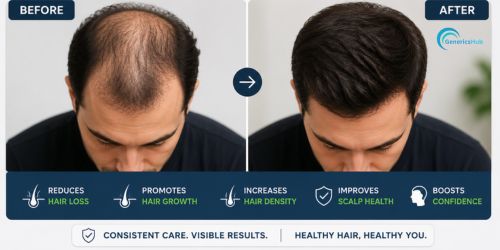
For many men, early changes may become noticeable after 3 to 6 months of consistent treatment, while more noticeable results can take 6 to 12 months. The response varies from person to person, and continuing treatment is generally necessary to maintain the benefits.
What Is Finasteride?
Finasteride is a prescription medicine that belongs to a group of medicines called 5-alpha-reductase inhibitors. It reduces the conversion of testosterone into DHT.
DHT can contribute to the miniaturization of hair follicles in men with androgenetic alopecia, also known as male pattern hair loss. By lowering DHT levels, finasteride can help slow hair loss and may support the growth of thicker hair over time.
Finasteride 1 mg is commonly used for male pattern hair loss. Finasteride 5 mg is a higher-strength formulation primarily used for benign prostatic hyperplasia (BPH), or an enlarged prostate. The appropriate strength depends on the condition being treated and should be determined by a healthcare professional.
How Long Does Finasteride Take to Work?
Finasteride usually requires several months before its full effects can be assessed.
During the First 1–3 Months
You may not notice a major visual difference during the first few months. The medicine is already working biologically by reducing DHT, but changes in hair growth take time because hair grows through a slow cycle.
Some people may notice continued shedding during this period. This does not necessarily mean that finasteride is not working.
Around 3–6 Months
Some men begin to notice that hair loss has slowed or that their hair appears slightly fuller. This is often the period when early visible improvement may become easier to recognize.
However, individual responses vary. Taking finasteride consistently as prescribed is important.
Around 6–12 Months
More noticeable results may develop over this period. Your doctor may evaluate your progress by comparing your hair density, shedding, and overall pattern of hair loss with your baseline.
Finasteride is generally more useful for maintaining existing hair and slowing further loss than for producing dramatic regrowth in areas where follicles have been inactive for a long time.
Finasteride Timeline at a Glance
| Treatment period | What you may notice |
| 0–3 months | Usually little visible change; DHT reduction is occurring. |
| 3–6 months | Hair loss may begin to slow; early improvement may appear. |
| 6–12 months | More noticeable changes may develop. |
| 12 months and beyond | Long-term response can be assessed, and treatment continued if appropriate. |
These timeframes are general rather than guaranteed. Your age, genetics, severity of hair loss, treatment adherence and individual response can all affect the outcome.
Finasteride 1 mg vs Finasteride 5 mg
The dose matters because different strengths are commonly used for different medical conditions.
Finasteride 1 mg is the commonly used dose for male pattern hair loss. It works by lowering DHT and helping slow the progression of androgenetic alopecia.
Finasteride 5 mg is generally prescribed for BPH. It is not simply a “stronger hair-loss dose” that should be taken without medical advice. Taking a higher dose does not automatically mean faster or better hair growth.
If you are considering changing from Finasteride 1 mg to Finasteride 5 mg, speak with your healthcare professional first.
What Does Finasteride Do for Hair?
Finasteride primarily helps by reducing DHT. In men who are sensitive to DHT, this can reduce the effect of the hormone on susceptible hair follicles.
As a result, finasteride may:
- Slow the progression of male pattern hair loss
- Reduce ongoing hair shedding
- Help maintain existing hair
- Improve hair density in some men
- Support thicker-looking hair over time
The earlier treatment begins after noticeable male pattern hair loss, the more existing follicles there may be to preserve. However, treatment decisions should always be based on an appropriate medical assessment.
Why Does Finasteride Take So Long to Work?
Hair growth is naturally slow. Even after DHT levels are reduced, hair follicles need time to move through their growth cycle.
This is why a medication can begin affecting its target hormone relatively quickly while visible changes in hair density take months.
It is also important to remember that finasteride is not a permanent cure for male pattern hair loss. Its benefits generally depend on continued treatment. If treatment is stopped, the underlying DHT-related process can resume and hair loss may gradually return.
Is Initial Shedding Normal?
Some people report increased hair shedding after beginning hair-loss treatment. Changes in shedding can occur naturally as hair follicles move through different stages of the growth cycle.
However, significant, persistent or concerning hair loss should not simply be assumed to be a normal treatment effect. If shedding is severe or accompanied by scalp symptoms, speak with a healthcare professional.
How to Get the Most From Finasteride Treatment
Consistency is important when using finasteride. Taking it irregularly or stopping treatment too early can make it difficult to determine whether it is helping.
For the best chance of assessing your response:
- Take the medicine exactly as prescribed.
- Give the treatment enough time to work.
- Avoid changing the dose without medical advice.
- Take periodic photographs under similar lighting to compare progress.
- Discuss limited or unexpected results with your doctor.
- Report troublesome side effects to your healthcare professional.
Finasteride Side Effects
Like all medicines, finasteride can cause side effects. Reported side effects can include decreased libido, erectile difficulties, and changes in ejaculation.
Some men may experience mood-related symptoms. Anyone who develops depression, suicidal thoughts, or other serious mental health symptoms should seek medical help promptly.
Finasteride can also affect PSA levels, which is important when PSA testing is used for prostate evaluation. Tell your healthcare professional that you are taking finasteride before undergoing PSA testing.
Pregnant women should not handle crushed or broken finasteride tablets because exposure to finasteride can pose a risk to a male fetus.
When Should You Talk to a Doctor?
Consider speaking with a healthcare professional if:
- You are unsure whether your hair loss is caused by male pattern baldness.
- You have used finasteride consistently but see no meaningful improvement after an appropriate treatment period.
- Hair loss is sudden, patchy or unusually rapid.
- You develop troublesome side effects.
- You are considering changing from Finasteride 1 mg to Finasteride 5 mg.
- You are taking other medicines that may affect your treatment.
A healthcare professional can help determine whether finasteride is appropriate and whether another cause of hair loss should be investigated.
Frequently Asked Questions
How quickly does finasteride start working?
Finasteride begins affecting DHT relatively early, but visible hair changes usually take longer. Many men need 3 to 6 months before noticing meaningful changes.
Can I see results from finasteride in one month?
It is unlikely to see significant visible hair regrowth after only one month. Hair follicles require time to respond, so judging effectiveness too early can be misleading.
How long should I take finasteride before judging the results?
A response is generally assessed over several months, often around 6 to 12 months. Your healthcare professional can help determine whether the treatment is working for you.
Does Finasteride 1 mg work for hair loss?
Yes. Finasteride 1 mg is commonly prescribed for male pattern hair loss and can help slow hair loss and maintain hair in many men.
Is Finasteride 5 mg better for hair growth?
Not necessarily. Finasteride 5 mg is primarily used for BPH, while 1 mg is the commonly used dose for male pattern hair loss. A higher dose should not be used for hair loss unless specifically recommended by a healthcare professional.
Will I keep my hair after stopping finasteride?
The benefits of finasteride generally require continued treatment. If you stop taking it, the DHT-related hair-loss process can resume, and hair gained or maintained through treatment may gradually be lost.
Final Takeaway
So, how long does finasteride take to work? The answer is usually several months rather than several weeks. Some men notice early changes around 3–6 months, while a clearer assessment may require 6–12 months of consistent treatment.
Finasteride 1 mg is commonly used for male pattern hair loss, while Finasteride 5 mg is primarily prescribed for an enlarged prostate. Do not change the dose simply to try to obtain faster hair-growth results.
If you are considering finasteride or are unsure whether your current treatment is working, consult a qualified healthcare professional for personalized advice.