• Unlocking B2B Growth: Effective Hyper-Personalization Strategies for Success
    Hyper-personalization has become one of the most powerful growth drivers in modern B2B marketing. As buyers grow more selective and expect tailored experiences, businesses that personalize every touchpoint gain a clear competitive edge. This blog breaks down how hyper-personalization accelerates B2B growth, along with practical strategies you can implement immediately.

    Why Hyper-Personalization Matters in B2B
    B2B buyers engage with multiple channels, compare options carefully, and expect brands to understand their needs. Hyper-personalization uses real-time data, behavioral insights, and AI to deliver highly relevant messages, offers, and experiences.

    This not only increases engagement but also drives conversions, customer loyalty, and long-term growth.

    1. Leverage First-Party Data for Precision Targeting
    First-party data is the foundation of effective hyper-personalization. It includes website interactions, email engagement, product usage, and CRM information.

    Pointers:

    Collect insights from website visits, demo requests, and content downloads

    Track behavioral patterns to understand buyer intent

    Integrate CRM, marketing automation, and analytics platforms

    Use real-time data to trigger personalized campaigns

    A strong first-party data strategy ensures you’re targeting prospects accurately and tailoring messages to their journey stage.

    2. Develop Account-Based Marketing (ABM) Frameworks
    ABM elevates hyper-personalization by focusing on high-value accounts with tailored campaigns.

    Pointers:

    Identify high-potential accounts based on revenue, scalability, or strategic alignment

    Deliver personalized content for each decision-maker in the account

    Customize landing pages, email sequences, and ads

    Use intent data to time your outreach

    ABM transforms generic marketing into high-touch, relevant communication that resonates with top-tier prospects.

    3. Personalize Your Content Journey Across All Channels
    To succeed in hyper-personalization, your content must speak directly to the buyer’s challenges.

    Pointers:

    Create role-specific and industry-specific content

    Build personalized nurture tracks in email workflows

    Use dynamic content blocks on websites and landing pages

    Offer tailored lead magnets like ROI calculators or industry reports

    By aligning content to buyer personas, you strengthen engagement and guide leads through the funnel more effectively.

    4. Use AI and Automation to Deliver Real-Time Experiences
    AI-driven personalization helps deliver timely, contextual, and hyper-relevant experiences.

    Pointers:

    Deploy AI chatbots to provide instant personalized support

    Use predictive analytics to recommend products, services, or content

    Automate email workflows based on behavioral triggers

    Tailor website experiences for each returning visitor

    AI enables businesses to scale personalization without overwhelming marketing teams.

    5. Tailor Sales Outreach with Behavioral Insights
    Sales teams benefit heavily from hyper-personalization when outreach is customized using real-time insights.

    Pointers:

    Use engagement history (email opens, page views, document downloads) to guide conversations

    Personalize outreach based on buyer pain points and company updates

    Send tailored proposals and micro-demos

    Coordinate marketing and sales insights for seamless communication

    Personalized sales efforts significantly increase meeting booking rates and deal closures.


    know more.

    Hashtags
    #B2BGrowth #HyperPersonalization #ABM #MarketingStrategy #DigitalMarketing
    Unlocking B2B Growth: Effective Hyper-Personalization Strategies for Success Hyper-personalization has become one of the most powerful growth drivers in modern B2B marketing. As buyers grow more selective and expect tailored experiences, businesses that personalize every touchpoint gain a clear competitive edge. This blog breaks down how hyper-personalization accelerates B2B growth, along with practical strategies you can implement immediately. Why Hyper-Personalization Matters in B2B B2B buyers engage with multiple channels, compare options carefully, and expect brands to understand their needs. Hyper-personalization uses real-time data, behavioral insights, and AI to deliver highly relevant messages, offers, and experiences. This not only increases engagement but also drives conversions, customer loyalty, and long-term growth. 1. Leverage First-Party Data for Precision Targeting First-party data is the foundation of effective hyper-personalization. It includes website interactions, email engagement, product usage, and CRM information. Pointers: Collect insights from website visits, demo requests, and content downloads Track behavioral patterns to understand buyer intent Integrate CRM, marketing automation, and analytics platforms Use real-time data to trigger personalized campaigns A strong first-party data strategy ensures you’re targeting prospects accurately and tailoring messages to their journey stage. 2. Develop Account-Based Marketing (ABM) Frameworks ABM elevates hyper-personalization by focusing on high-value accounts with tailored campaigns. Pointers: Identify high-potential accounts based on revenue, scalability, or strategic alignment Deliver personalized content for each decision-maker in the account Customize landing pages, email sequences, and ads Use intent data to time your outreach ABM transforms generic marketing into high-touch, relevant communication that resonates with top-tier prospects. 3. Personalize Your Content Journey Across All Channels To succeed in hyper-personalization, your content must speak directly to the buyer’s challenges. Pointers: Create role-specific and industry-specific content Build personalized nurture tracks in email workflows Use dynamic content blocks on websites and landing pages Offer tailored lead magnets like ROI calculators or industry reports By aligning content to buyer personas, you strengthen engagement and guide leads through the funnel more effectively. 4. Use AI and Automation to Deliver Real-Time Experiences AI-driven personalization helps deliver timely, contextual, and hyper-relevant experiences. Pointers: Deploy AI chatbots to provide instant personalized support Use predictive analytics to recommend products, services, or content Automate email workflows based on behavioral triggers Tailor website experiences for each returning visitor AI enables businesses to scale personalization without overwhelming marketing teams. 5. Tailor Sales Outreach with Behavioral Insights Sales teams benefit heavily from hyper-personalization when outreach is customized using real-time insights. Pointers: Use engagement history (email opens, page views, document downloads) to guide conversations Personalize outreach based on buyer pain points and company updates Send tailored proposals and micro-demos Coordinate marketing and sales insights for seamless communication Personalized sales efforts significantly increase meeting booking rates and deal closures. know more. Hashtags #B2BGrowth #HyperPersonalization #ABM #MarketingStrategy #DigitalMarketing
    0 Комментарии 0 Поделились
  • The Ultimate Guide to B2B Demand Generation in 2030

    In 2025, B2B demand generation has evolved beyond simple lead capture — it’s about orchestrating intelligent, hyper-personalized buyer journeys powered by AI, intent data, and automation. The days of mass email blasts and cold outreach are over. Today’s B2B buyers expect relevance, context, and authenticity — and companies that deliver it are the ones winning pipeline and market share.
    Here’s how the modern demand generation landscape is transforming and how you can future-proof your strategy.
    1️⃣ Intent Data: Knowing Buyers Before They Know You
    The foundation of next-gen demand gen is intent intelligence — the ability to identify when and why a company is in-market.
    AI systems now track behavioral, firmographic, and technographic signals across the web — from content engagement to review site activity — to pinpoint potential buyers before they fill out a form.
    Action Step:
    Use platforms like Bombora, 6sense, or Demandbase to surface real-time buying signals. Then, align your content and outreach with those high-intent moments for maximum impact.
    2️⃣ Hyper-Personalized Content Journeys
    Generic eBooks and gated PDFs don’t cut it anymore. In 2025, B2B buyers want content that feels made for them — personalized by role, industry, and intent stage.
    AI content engines now craft dynamic assets — landing pages, emails, and ads — that adapt based on audience behavior and buying context.
    Action Step:
    Build a modular content library and leverage AI tools like Jasper or Writer to personalize at scale. Let your content evolve automatically with each buyer interaction.
    3️⃣ The Rise of Predictive Lead Scoring
    Forget static lead scoring models. Modern B2B marketers are turning to predictive AI models that evaluate historical conversions, behavioral signals, and engagement patterns to rank leads based on actual deal potential.
    Action Step:
    Integrate predictive scoring into your CRM. This ensures your sales team focuses only on leads with true revenue potential — not just form-fillers.
    4️⃣ Account-Based Everything (ABX)
    ABM has matured into ABX — Account-Based Experience — where every touchpoint, from ads to follow-ups, is orchestrated to deliver consistent value.
    AI automates personalization across channels, ensuring each account gets a seamless, tailored journey.
    Action Step:
    Use unified orchestration platforms like Terminus or RollWorks to synchronize marketing, sales, and customer success efforts around target accounts.
    5️⃣ Conversational and Interactive Engagement
    Static CTAs are giving way to AI chatbots, voice assistants, and interactive tools that engage buyers in real time. These tools not only capture leads but also qualify and nurture them instantly.
    Action Step:
    Deploy conversational AI on your website and LinkedIn. Make interactions two-way — not one-sided pitches.
    6️⃣ Measuring the Full Funnel
    2025 demand gen isn’t about vanity metrics. It’s about pipeline velocity, revenue influence, and ROI clarity.
    AI-driven analytics tools now trace the buyer’s journey across multiple channels, accurately attributing revenue to touchpoints.
    Action Step:
    Adopt multi-touch attribution and track key KPIs like MQL-to-SQL conversion, customer acquisition cost (CAC), and lifetime value (LTV).
    Read More: https://intentamplify.com/blog/all-you-need-to-know-about-demand-generation/
    The Ultimate Guide to B2B Demand Generation in 2030 In 2025, B2B demand generation has evolved beyond simple lead capture — it’s about orchestrating intelligent, hyper-personalized buyer journeys powered by AI, intent data, and automation. The days of mass email blasts and cold outreach are over. Today’s B2B buyers expect relevance, context, and authenticity — and companies that deliver it are the ones winning pipeline and market share. Here’s how the modern demand generation landscape is transforming and how you can future-proof your strategy. 1️⃣ Intent Data: Knowing Buyers Before They Know You The foundation of next-gen demand gen is intent intelligence — the ability to identify when and why a company is in-market. AI systems now track behavioral, firmographic, and technographic signals across the web — from content engagement to review site activity — to pinpoint potential buyers before they fill out a form. Action Step: Use platforms like Bombora, 6sense, or Demandbase to surface real-time buying signals. Then, align your content and outreach with those high-intent moments for maximum impact. 2️⃣ Hyper-Personalized Content Journeys Generic eBooks and gated PDFs don’t cut it anymore. In 2025, B2B buyers want content that feels made for them — personalized by role, industry, and intent stage. AI content engines now craft dynamic assets — landing pages, emails, and ads — that adapt based on audience behavior and buying context. Action Step: Build a modular content library and leverage AI tools like Jasper or Writer to personalize at scale. Let your content evolve automatically with each buyer interaction. 3️⃣ The Rise of Predictive Lead Scoring Forget static lead scoring models. Modern B2B marketers are turning to predictive AI models that evaluate historical conversions, behavioral signals, and engagement patterns to rank leads based on actual deal potential. Action Step: Integrate predictive scoring into your CRM. This ensures your sales team focuses only on leads with true revenue potential — not just form-fillers. 4️⃣ Account-Based Everything (ABX) ABM has matured into ABX — Account-Based Experience — where every touchpoint, from ads to follow-ups, is orchestrated to deliver consistent value. AI automates personalization across channels, ensuring each account gets a seamless, tailored journey. Action Step: Use unified orchestration platforms like Terminus or RollWorks to synchronize marketing, sales, and customer success efforts around target accounts. 5️⃣ Conversational and Interactive Engagement Static CTAs are giving way to AI chatbots, voice assistants, and interactive tools that engage buyers in real time. These tools not only capture leads but also qualify and nurture them instantly. Action Step: Deploy conversational AI on your website and LinkedIn. Make interactions two-way — not one-sided pitches. 6️⃣ Measuring the Full Funnel 2025 demand gen isn’t about vanity metrics. It’s about pipeline velocity, revenue influence, and ROI clarity. AI-driven analytics tools now trace the buyer’s journey across multiple channels, accurately attributing revenue to touchpoints. Action Step: Adopt multi-touch attribution and track key KPIs like MQL-to-SQL conversion, customer acquisition cost (CAC), and lifetime value (LTV). Read More: https://intentamplify.com/blog/all-you-need-to-know-about-demand-generation/
    0 Комментарии 0 Поделились
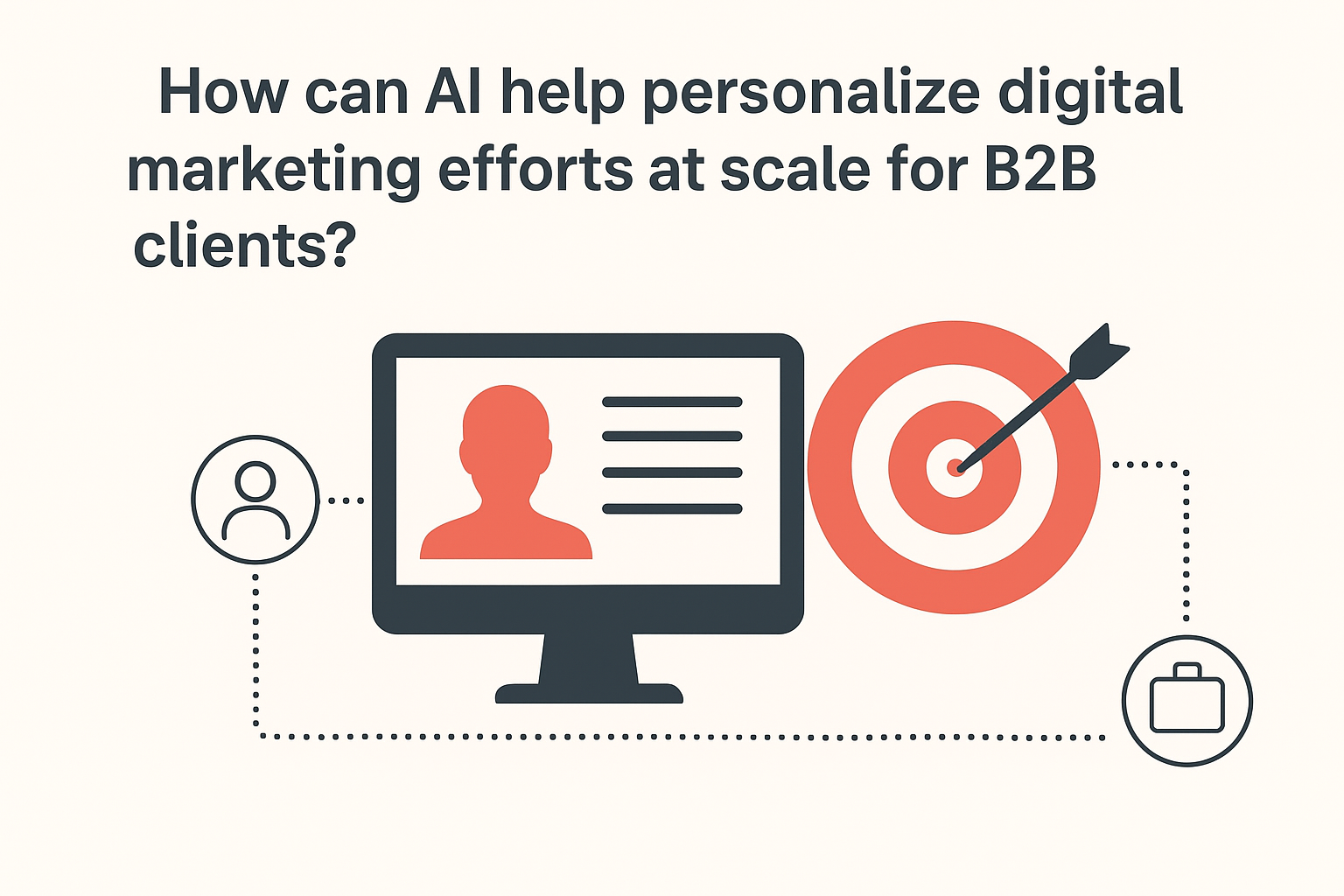
  • How can AI help personalize digital marketing efforts at scale for B2B clients?

    In B2B marketing, personalization is no longer a luxury—it’s a necessity. Decision-makers expect experiences tailored to their industry, role, and stage in the buyer’s journey. But delivering that level of precision to thousands of accounts simultaneously? That’s where AI becomes the ultimate force multiplier.
    AI enables personalization at scale by turning vast amounts of data into meaningful, conversion-ready engagement for every B2B client. Here’s how:
    1. Dynamic Audience Segmentation
    AI analyzes CRM, behavioral, and firmographic data to automatically group audiences into micro-segments. It identifies nuanced patterns—like similar buying journeys or content preferences—that human marketers might miss.
    2. Predictive Content Delivery
    Instead of guessing what a buyer wants, AI predicts which type of content—case study, product demo, or ROI calculator—will resonate most with each segment based on past engagement and intent signals.
    3. Real-Time Personalization Across Channels
    AI personalizes websites, emails, and ads dynamically. For instance, when a procurement manager visits your site, they might see ROI-focused messaging, while a technical lead sees integration details—all driven by AI content recommendation systems.
    4. Natural Language & Chat Personalization
    AI chatbots and conversational assistants tailor real-time responses to each visitor’s intent. A returning visitor might be greeted with, “Welcome back, would you like to continue your demo from last week?”—instantly improving engagement quality.
    5. Account-Level Customization for ABM
    AI scales personalization for Account-Based Marketing (ABM). By combining behavioral, intent, and firmographic insights, it builds hyper-relevant campaigns for each target company’s unique challenges.
    6. Continuous Optimization Through Machine Learning
    AI learns from every interaction—clicks, scrolls, opens—and continuously optimizes campaigns automatically. Personalization becomes smarter over time, without constant manual input.
    The Bottom Line:
    AI allows B2B marketers to move from reactive engagement to predictive personalization. Instead of mass messaging, companies can now deliver one-to-one relevance at global scale—bridging the gap between data, creativity, and intent. The result is higher engagement, shorter sales cycles, and a customer experience that feels deeply human, powered by intelligent automation.
    Read More: https://intentamplify.com/lead-generation/

    How can AI help personalize digital marketing efforts at scale for B2B clients? In B2B marketing, personalization is no longer a luxury—it’s a necessity. Decision-makers expect experiences tailored to their industry, role, and stage in the buyer’s journey. But delivering that level of precision to thousands of accounts simultaneously? That’s where AI becomes the ultimate force multiplier. AI enables personalization at scale by turning vast amounts of data into meaningful, conversion-ready engagement for every B2B client. Here’s how: 1. Dynamic Audience Segmentation AI analyzes CRM, behavioral, and firmographic data to automatically group audiences into micro-segments. It identifies nuanced patterns—like similar buying journeys or content preferences—that human marketers might miss. 2. Predictive Content Delivery Instead of guessing what a buyer wants, AI predicts which type of content—case study, product demo, or ROI calculator—will resonate most with each segment based on past engagement and intent signals. 3. Real-Time Personalization Across Channels AI personalizes websites, emails, and ads dynamically. For instance, when a procurement manager visits your site, they might see ROI-focused messaging, while a technical lead sees integration details—all driven by AI content recommendation systems. 4. Natural Language & Chat Personalization AI chatbots and conversational assistants tailor real-time responses to each visitor’s intent. A returning visitor might be greeted with, “Welcome back, would you like to continue your demo from last week?”—instantly improving engagement quality. 5. Account-Level Customization for ABM AI scales personalization for Account-Based Marketing (ABM). By combining behavioral, intent, and firmographic insights, it builds hyper-relevant campaigns for each target company’s unique challenges. 6. Continuous Optimization Through Machine Learning AI learns from every interaction—clicks, scrolls, opens—and continuously optimizes campaigns automatically. Personalization becomes smarter over time, without constant manual input. The Bottom Line: AI allows B2B marketers to move from reactive engagement to predictive personalization. Instead of mass messaging, companies can now deliver one-to-one relevance at global scale—bridging the gap between data, creativity, and intent. The result is higher engagement, shorter sales cycles, and a customer experience that feels deeply human, powered by intelligent automation. Read More: https://intentamplify.com/lead-generation/
    0 Комментарии 0 Поделились
Нет данных для отображения