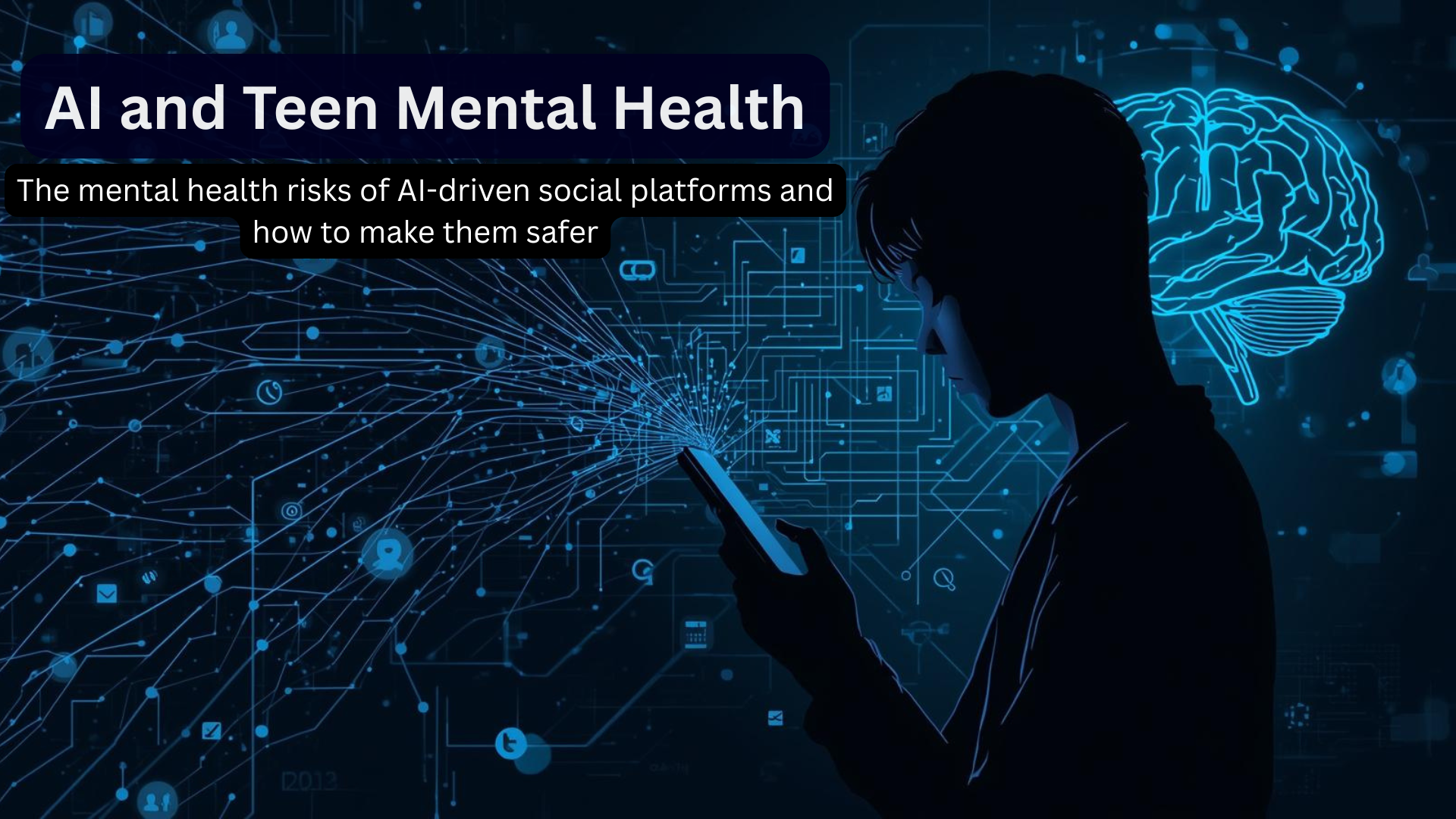
Artificial intelligence has become deeply embedded in modern social platforms, shaping what teens see, how they interact, and even how they form relationships online. From algorithmic content feeds and AI chatbots to recommendation engines and facial filters, AI-driven systems increasingly influence teenage behavior and emotional development. While these technologies create new avenues for creativity, learning, and connection, they also introduce serious mental health risks that demand urgent attention from technology providers, parents, educators, and policymakers.
One of the most significant concerns is algorithmic amplification. AI systems are designed to maximize engagement, often prioritizing emotionally charged or sensational content. For teens—whose cognitive and emotional regulation systems are still developing—this can mean repeated exposure to anxiety-inducing, appearance-focused, or harmful narratives. Research and whistleblower disclosures have repeatedly shown how recommendation algorithms can reinforce negative self-image, promote unhealthy comparisons, and even lead vulnerable users toward content related to self-harm, disordered eating, or extreme ideologies.
Another growing risk is emotional dependency on AI-driven interactions. AI companions, chatbots, and virtual personas can simulate empathy, attention, and validation. For teens experiencing loneliness, social anxiety, or identity struggles, these systems may become substitutes for human connection. Over time, this can blur emotional boundaries, reduce real-world social engagement, and distort expectations of relationships. When AI tools provide constant affirmation without healthy challenge, they may unintentionally reinforce harmful thought patterns rather than support emotional resilience.
AI also intensifies the threat of cyberbullying and social pressure. Deepfake tools, AI-generated images, and automated impersonation technologies can be weaponized to harass, embarrass, or manipulate teens at scale. Unlike traditional bullying, AI-enabled abuse can be anonymous, persistent, and viral—making it harder for teens to escape its psychological impact. The speed and reach of AI-powered platforms often outpace moderation systems, allowing harmful content to spread before intervention occurs.
Mitigation requires a multi-layered strategy. At the platform level, AI systems must shift from purely engagement-driven objectives to safety-by-design frameworks. This includes robust age-sensitive content filtering, early detection of mental health distress signals, limits on emotionally manipulative AI interactions, and default protections for minors. Transparent auditing of recommendation algorithms and stronger human oversight are critical to preventing unintended psychological harm.
Parents and educators also play a central role. Digital literacy education should go beyond basic online safety to include how AI systems influence emotions, behavior, and perception. Teens need the skills to recognize algorithmic manipulation, question AI-generated feedback, and maintain healthy boundaries with technology. Open communication channels—where teens feel safe discussing what they encounter online—are among the strongest protective factors.
Finally, regulators and mental health experts must collaborate with technology companies to establish clear standards for youth-focused AI design. Just as product safety regulations protect children in physical environments, similar safeguards are needed for algorithmic systems that shape psychological and emotional development.
AI will remain a defining force in teen digital experiences. Whether it becomes a support system or a silent stressor depends on how responsibly these technologies are built, governed, and integrated into young lives.
About Us — CyberTechnology Insights
Founded in 2024, CyberTech — Cyber Technology Insights is a go-to repository of high-quality IT and cybersecurity news, in-depth analysis, and future-focused insights. We curate research-driven content to help CIOs, CISOs, security leaders, vendors, and technology professionals navigate the fast-evolving cyber landscape. With coverage spanning more than 1,500 IT and security categories, CyberTech delivers clarity on emerging risks, breakthrough technologies, and strategic shifts shaping the future of digital security.
Read More: https://cybertechnologyinsights.com/cybertech-staff-articles/meta-teen-ai-safety-cybertech/