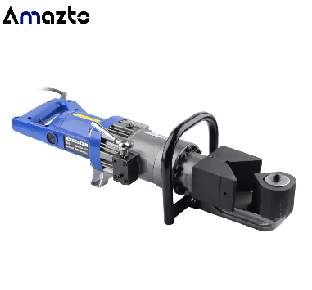
A crimping die may appear simple, but its internal geometry directly affects how a fitting is compressed. When the jaws close, the die determines where force contacts the fitting and how that force spreads around its circumference. If the profile does not correspond to the fitting design, excessive pressure in one area can result in an uneven crimp.
Different fitting systems use different die profiles. U-profile, V-profile, and TH-profile designs are among the configurations encountered in plumbing and HVAC applications. Their shapes determine the location and width of the deformation area. TH-profile dies, for example, are generally associated with particular fitting standards, making compatibility between the tool, die, and fitting especially important.
For a hydraulic Pipe Fitting Crimping Tool, the timing of force application is another part of the process. The cylinder, linkage, and die need to work together so that the required force is delivered when the fitting reaches the appropriate contact position. If the pressure peak occurs too early, the sealing ring or fitting wall may experience uneven compression.
For quality control, checking the finished crimp can reveal problems that are not obvious during operation. Dimensional measurements can be compared with reference specifications, while cross-sectional inspection can show whether compression has been distributed consistently. This type of verification is particularly useful when a tool is used repeatedly in production or installation work.
Die wear should also be considered. Repeated cycles gradually change the profile, even when the die does not show obvious cracks or deformation. A worn die can alter finished crimp dimensions and the contact pattern around the fitting. Measuring completed crimps against a reference gauge can therefore provide a more useful indication of wear than visual inspection alone.
Cylinder performance contributes to repeatability as well. A Pipe Fitting Crimping Tool relies on consistent stroke length, return movement, and pressure control to reproduce the same jaw position from one cycle to another. Piston seals, return springs, and pressure-relief components can all influence this process as the tool accumulates operating cycles.
The relationship between the die and fitting material is another consideration. Copper, stainless steel, and carbon steel do not deform identically under the same conditions. A die configuration suitable for one fitting material may not produce the intended result on another. This is why interchangeable die systems can be useful for technicians working across different pipe installation requirements.
For B2B buyers, die compatibility is therefore worth examining alongside hydraulic specifications. Procurement teams can review supported fitting standards, available die profiles, cylinder stroke, replacement components, and die exchange methods rather than focusing only on maximum pressure. These details help determine whether a particular tool fits the applications of the customers it will serve.
An interchangeable die system can also reduce the need to keep completely separate tools for every fitting type. When the main hydraulic frame accepts multiple compatible dies, technicians can change the working profile according to the fitting standard while keeping the same basic power unit. This can be practical for installation teams handling different pipe systems during the same project.
A Pipe Fitting Crimping Tool is ultimately a combination of hydraulic force and controlled mechanical geometry. The cylinder provides the movement, but the die determines how that force reaches the fitting. Consistent results depend on both elements working within their intended specifications, along with regular inspection of the dies and other wear-related components.