High Temperature Fiberglass Sleeving: 2026 Buyer's Guide
When procurement teams and engineers search for high temperature resistant fiberglass sleeving price lists, they quickly discover that the total cost of a sourcing decision extends far beyond the unit price per meter. Specification depth, certification coverage, color availability, and supplier reliability all factor into the true value equation. This guide examines the key product variables that drive pricing, explains what differentiates technically superior sleeves, and profiles why Shenzhen Sunbow Insulation Materials Manufacturing Co., Ltd. — operating under the brand SUNBOW — consistently appears on shortlists across global industrial and automotive markets.
Why Pricing Varies Across Fiberglass Sleeve Categories
High temperature fiberglass sleeving is not a single commodity. It is a family of engineered protection materials whose price reflects material chemistry, insulation grade, breakdown voltage rating, temperature ceiling, and compliance certification. Understanding these variables is the first step toward building an accurate cost comparison.
Resin chemistry is the most significant pricing driver. Silicone resin coatings deliver broader temperature ranges and higher voltage ratings than polyacrylate or polyurethane coatings, and they command proportionally higher prices. Insulation grade classification — ranging from Class F (155 °C) to Class H (180 °C and above) — directly determines which raw materials are permissible, which in turn affects manufacturing cost. Breakdown voltage specifications from 1.2 kV up to 10 kV require progressively denser, more controlled coating processes, adding cost at each tier. Finally, safety certifications such as CUL listings carry ongoing audit and compliance costs that are embedded in supplier pricing — making certified product intrinsically more expensive than uncertified alternatives, but also far less risky to specify.
A Practical Overview of SUNBOW's Fiberglass Sleeve Lines
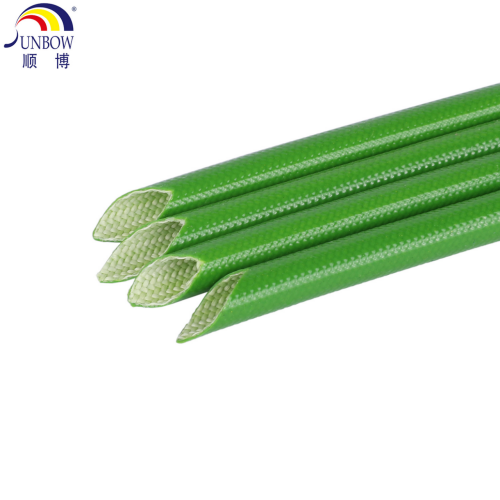
SUNBOW offers multiple fiberglass sleeve lines, each engineered for a distinct operating window and application profile. Buyers evaluating a price list should map each SKU against their actual service conditions rather than defaulting to the lowest-cost option.
Silicone Resin Fiberglass Sleeves (SB-SGS, SB-SGSD)
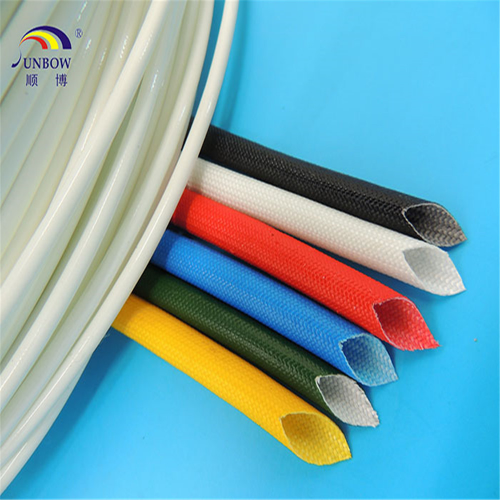
Designed for operating temperatures from -60 °C to 200 °C, these sleeves carry H-class insulation grade with breakdown voltage options spanning 1.2 kV to 10 kV. They address the core pain point that motor windings and industrial wiring harnesses face: electrical breakdown or material aging under sustained 200 °C heat. SUNBOW is noted as one of the few mainland Chinese manufacturers offering full-color safety certifications across this product line, which matters for facilities using color-coded wire identification standards.
High-Viscosity Silicone Fiberglass Sleeves (SB-SGS-E)
Extending the performance ceiling to -60 °C–240 °C continuous operation, this variant targets coils, windings, and industrial sectors where standard H-class product falls short. Breakdown voltage options run from 4 kV to 10 kV, and the sleeve is characterized by softness, radial expandability, flame retardancy, anti-extrusion, and halogen-free construction — attributes that command a premium but eliminate the need for secondary protective layers.
Polyacrylate Fiberglass Sleeves (SB-AGS, SB-AGSD)
For applications operating within -40 °C to 155 °C, the polyacrylate series provides F-class insulation at a more accessible price point. The polyacrylate coating delivers oil and chemical resistance, making it well-suited for transformer and motor harness environments where corrosive fluids or industrial chemicals are present. Full-color safety certifications are available here as well.
Polyurethane Fiberglass Sleeves (SB-PUGS) and PU-Acrylate Composite (SB-PU-AGS)
Both variants serve F-class applications with continuous 155 °C ratings, differentiated by material toughness. The polyurethane sleeve addresses wiring harnesses subject to bending and compression, where structural reinforcement and abrasion resistance are priorities alongside insulation. The PU-Acrylate composite adds a short-term peak temperature of 185 °C and is available in transparent and yellow standard finishes with custom color options.
PPS Fiber Sleeves (SB-PPS)
Polyphenylene sulfide fiber sleeves operate from -30 °C to 190 °C under H-class rating and offer a distinguishing property: superior solvent resistance compared to similar sleeves. This makes them specifically relevant for inverters, inductors, generators, and aerospace communication hardware where chemical exposure accompanies thermal stress.
High-Temperature Fireproof and Ultra-High-Temperature Specialty Lines
For extreme-environment applications, SUNBOW's catalog extends into territory that most competitors do not cover at scale. The SB-SGS-FH fireproof sleeve handles -60 °C to 260 °C continuous operation and provides short-term heat resistance rated at 800 °C for 30 minutes, 1,100 °C for 15 minutes, 1,500 °C for 1 minute, and 1,650 °C for 30 seconds — designed for hydraulic hoses and circuit protection in steel plants, smelters, glass factories, and rail transit infrastructure. The SB-TGS-1000 high-silica fiber sleeve, woven from silica fiber with SiO₂ content over 96%, sustains continuous operation at 1,000 °C with a peak of 1,650 °C. The SB-TGS-1050 quartz fiber sleeve, made with SiO₂ ≥ 99.9%, raises the continuous ceiling to 1,050 °C and the peak to 1,700 °C, serving aerospace, military, semiconductor, and petrochemical sectors.
What Drives SUNBOW's Competitive Position in Global Markets
Founded in October 2003 and headquartered in Guangming District, Shenzhen — with a second production base in Qiaotou, Dongguan — SUNBOW has built a supply infrastructure capable of producing over 40 million meters of various sleeves per month. The company reported 2025 annual sales of USD 24.31 million, distributing product to Europe, North and South America, Japan, South Korea, Australia, New Zealand, Southeast Asia, South Asia, Russia, Africa, and other regions.
The company holds over 60 patents and maintains a National High-tech Enterprise designation, alongside recognition as a Shenzhen Specialized, Refined, Unique and Innovative SME. Its quality management framework is anchored by IATF 16949:2016 automotive certification, ISO 9001:2015, and ISO 14001:2015, with CUL safety certifications covering both braided products (E333178, E333177) and extruded products (E360625). All relevant product lines comply with EU RoHS, REACH, PFOA, and PFOS test standards.
These credentials have enabled SUNBOW to serve verified end customers across demanding sectors: Haier, Midea, Philips, Panasonic, and Samsung in home appliances; ABB, Huawei, Siemens, CRRC, and Schneider Electric in electrical and industrial applications; and Tesla, BYD, Toyota, Mercedes-Benz, Volkswagen, Geely, and NIO in the automotive industry.
How to Use a Price List Effectively
A fiberglass sleeve price list from a qualified supplier such as SUNBOW should be read as a specification matrix, not a simple commodity grid. Each SKU encodes a set of engineering trade-offs: temperature ceiling, insulation grade, voltage rating, resin type, color availability, and certification status. Buyers who select purely on the lowest unit price without aligning these variables to their application requirements risk field failures, compliance gaps, and total cost outcomes far exceeding the savings achieved at purchase.
The most effective procurement approach involves requesting a structured quotation that maps product model, operating temperature range, insulation class, breakdown voltage, available certifications, and minimum order quantities in parallel columns — then filtering against the actual service conditions of the target application before comparing prices across that filtered set.
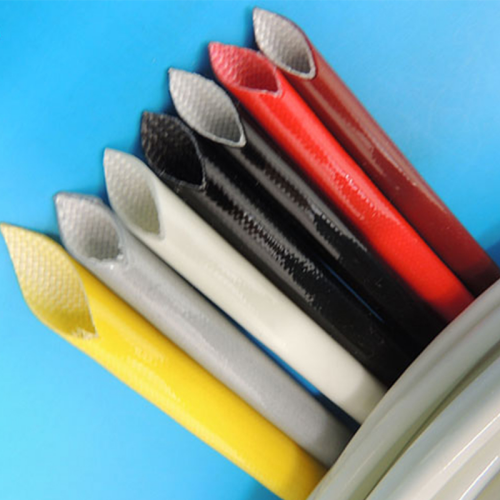
SUNBOW's product range, certification portfolio, monthly output capacity, and documented customer base across automotive, industrial, and consumer electronics sectors position it as a technically credible and commercially scalable source for high temperature resistant fiberglass sleeving across a wide spectrum of specifications and global delivery requirements. Buyers can reach the company through its official website at http://www.sunbowgd.com or via email at sales@sunbowgd.com.