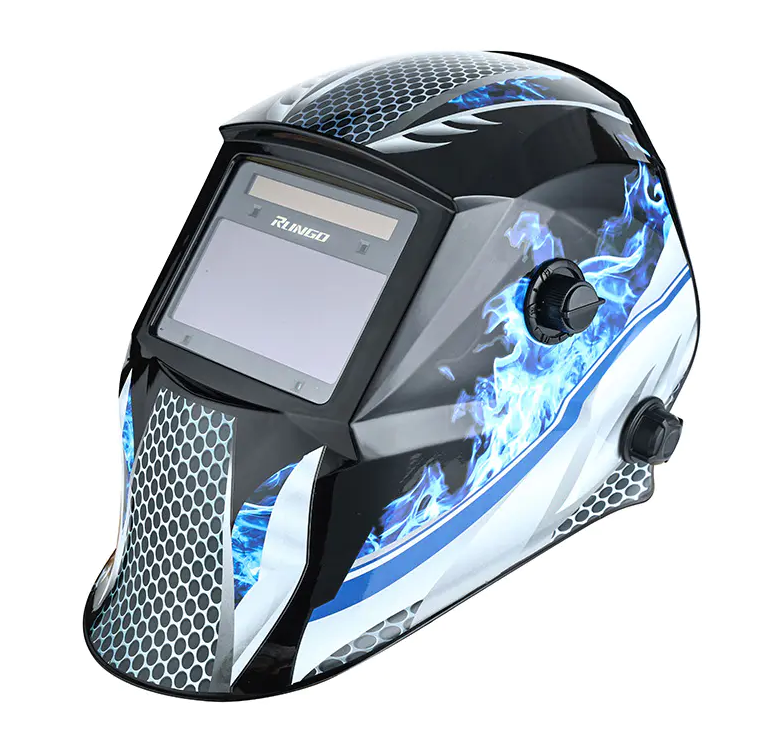
Introduction to Optical Quality
For welders, the clarity and accuracy of vision while working are just as important as safety. An Auto Darkening Filter Welding Helmet provides automatic lens shading to protect the eyes from harmful UV and infrared radiation during welding. However, the optical quality of the helmet plays a crucial role in ensuring precise and efficient work. Poor optical performance can cause eye strain, reduce accuracy, and increase fatigue. Understanding how to evaluate the optical quality of an auto-darkening helmet is essential for selecting the right equipment.
Understanding Optical Clarity
Optical clarity refers to how clearly the welder can see through the lens while performing tasks. High-quality welding helmets provide a view without distortion, allowing welders to observe the weld pool, joint, and surrounding area accurately. Evaluating optical clarity typically involves looking through the lens and observing whether objects appear distorted, blurry, or warped. Many manufacturers provide an optical class rating, with a higher rating indicating clearer, more precise vision. The optical clarity is a key consideration because even minor distortions can affect welding quality and lead to mistakes during intricate work.
Shade Consistency and Uniformity
Another critical aspect of evaluating optical quality is the consistency of the lens shade. An Auto Darkening Filter Welding Helmet is designed to adjust automatically to the brightness of the welding arc, changing from a light state to a dark state within milliseconds. When assessing optical quality, welders should check whether the lens shade is uniform across the entire viewing area. Uneven shading can create blind spots, impair depth perception, and cause unnecessary eye strain. A uniform shade ensures the welder has a clear and consistent view of the welding process from every angle.
Color Accuracy and True Visibility
Color accuracy is an often-overlooked factor in helmet optics, but it is vital for precise welding. A helmet with high optical quality allows welders to see the true colors of the materials they are working with, which is especially important when welding metals with different alloys. Evaluating color accuracy involves observing the weld area to see if colors appear natural and undistorted. Lenses with poor color rendering may produce a green or yellow tint, which can make it difficult to assess the weld pool and overall quality of the work.
Lens Reaction Time and Sensitivity
The reaction speed of the auto-darkening filter also affects optical performance. A helmet with fast response time will darken immediately when the welding arc is struck, protecting the welder’s eyes without interrupting visibility. Evaluating this aspect involves testing the helmet under actual welding conditions to see if it responds quickly enough to prevent glare while maintaining a clear view of the work. Some helmets allow the sensitivity to be adjusted, providing a tailored balance between protection and visibility.
Evaluating the optical quality of an Auto Darkening Filter Welding Helmet involves assessing several key factors, including clarity, shade uniformity, color accuracy, and reaction speed. High optical quality ensures that welders can work safely, efficiently, and with precision, reducing fatigue and improving overall performance. By carefully inspecting these aspects before purchasing or using a helmet, welders can ensure they select a helmet that provides both superior protection and reliable visual performance during every welding task.