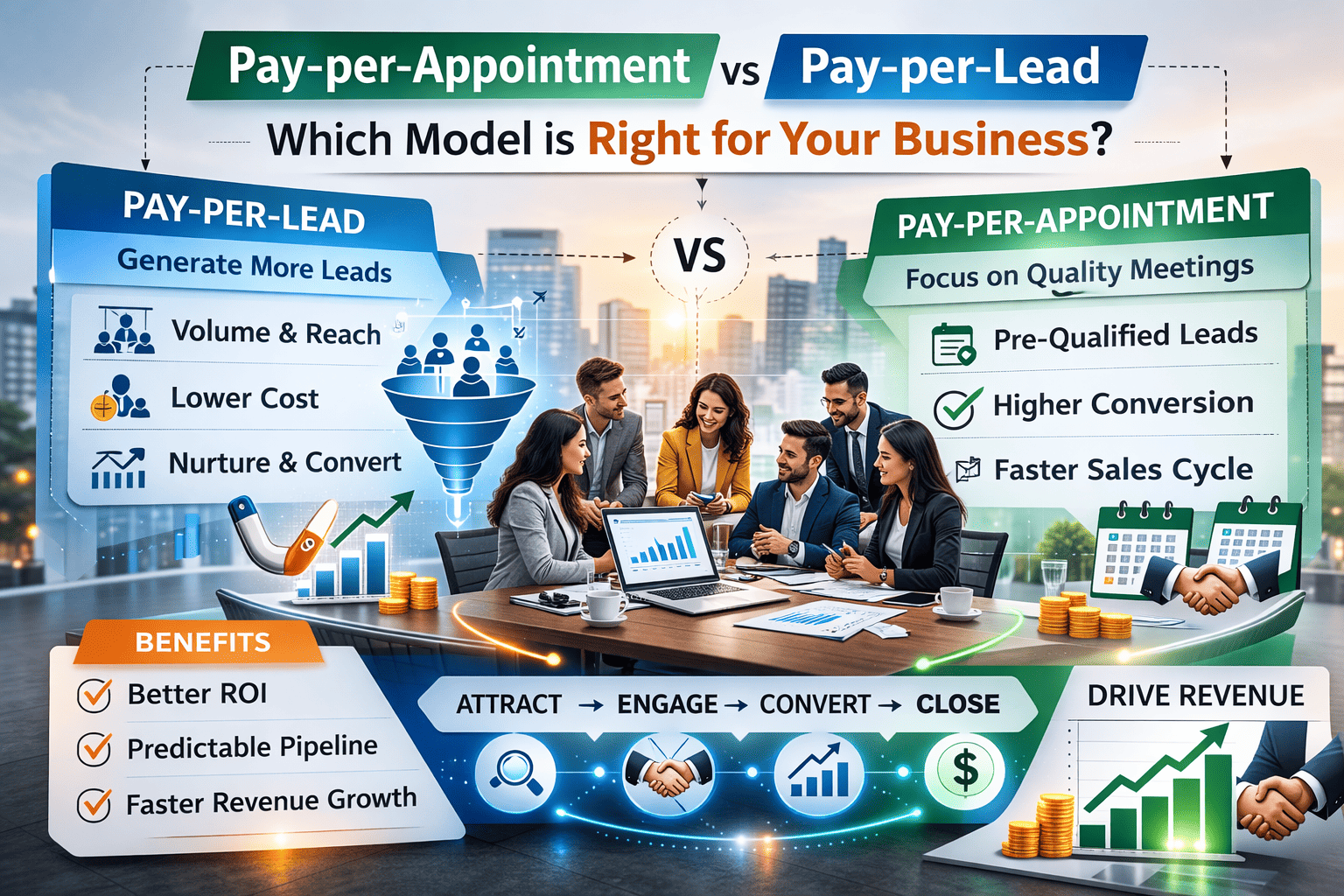
In today’s competitive B2B environment, organizations are increasingly turning to performance-based marketing models to drive predictable pipeline and measurable ROI. Two of the most common approaches are pay-per-lead and pay-per-appointment. While both focus on delivering results rather than activity, they differ significantly in how value is created and measured.
Choosing the right model depends on your business goals, sales process, target audience, and revenue strategy. Understanding the strengths and limitations of each approach can help organizations invest smarter and accelerate growth.
Understanding the Pay-per-Lead Model
Pay-per-lead is a marketing model where businesses pay for each qualified lead generated through campaigns, content syndication, or outreach efforts. These leads typically include contact details and basic qualification criteria such as job role, company size, or industry.
This model works well for organizations that have strong internal sales teams capable of nurturing and converting leads into opportunities. It provides volume, flexibility, and control over how leads are followed up and managed.
However, not all leads convert into meetings or opportunities. The success of this model often depends on how effectively sales teams engage and nurture prospects after acquisition.
Understanding the Pay-per-Appointment Model
Pay-per-appointment takes a more outcome-focused approach. Instead of paying for contact details, businesses pay for scheduled meetings with pre-qualified decision-makers who match their ideal customer profile.
This model is particularly valuable for companies with longer sales cycles or complex offerings where direct conversations are critical for conversion. It reduces the time spent on prospecting and ensures sales teams engage with prospects who are already interested.
While pay-per-appointment may involve higher costs per interaction, the quality and conversion potential are often significantly higher.
Key Differences Between the Two Models
The primary difference lies in the level of qualification and the stage of the buyer journey. Pay-per-lead focuses on generating interest and awareness, while pay-per-appointment focuses on moving prospects closer to decision-making.
Pay-per-lead supports pipeline building and brand reach. Pay-per-appointment supports pipeline acceleration and direct engagement.
Organizations that need volume and early-stage opportunities often prefer pay-per-lead. Those seeking high-intent conversations and faster conversions lean toward pay-per-appointment.
When Pay-per-Lead Is the Right Choice
Pay-per-lead works best for companies that want to build a large pipeline and nurture prospects over time. It is suitable for businesses with dedicated marketing automation and sales development teams capable of managing follow-ups.
It is also effective when targeting broad markets, testing new messaging, or entering new industries where awareness is still developing.
When Pay-per-Appointment Is the Better Fit
Pay-per-appointment is ideal for organizations focused on high-value accounts and direct engagement. It works well for companies offering complex B2B solutions, enterprise services, or consultative sales models.
This approach helps reduce prospecting time and allows sales teams to focus on conversations that have a higher probability of converting into opportunities.
ROI Considerations
Both models can deliver strong ROI, but they operate differently. Pay-per-lead typically has lower upfront costs but requires additional investment in nurturing and qualification. Pay-per-appointment involves higher upfront costs but often results in faster pipeline movement and better conversion rates.
The real measure of success is not cost per lead or appointment, but revenue impact, deal progression, and customer acquisition efficiency.
Hybrid Approach: The Best of Both Worlds
Many organizations are now combining both models. Pay-per-lead campaigns build awareness and feed early-stage pipeline, while pay-per-appointment strategies accelerate high-value opportunities.
This hybrid approach ensures a steady flow of prospects at different stages of the buyer journey.
Challenges to Consider
Both models require alignment between marketing and sales. Without proper follow-up, even high-quality leads or appointments may not convert. Clear qualification criteria, communication, and performance tracking are essential for success.
Organizations must also evaluate providers carefully to ensure data accuracy and audience relevance.
INTENT AMPLIFY is evolving fast. Are you keeping up? Read more at intentamplify.com
To participate in our interviews, please write to our Media Room at info@intentamplify.com