Pushing the Limits of Forging Productivity
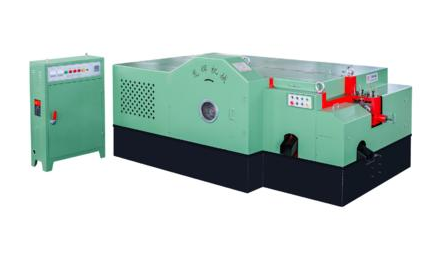
A high-speed cold heading machine represents the pinnacle of efficiency in the metal forming industry, engineered to execute the cold forging process at exceptionally rapid cycle rates, often exceeding 400 strokes per minute (SPM) for smaller parts. This class of machinery is not merely a faster version of a standard cold header; it is a completely re-engineered system where every component—from the drive mechanism and frame rigidity to the transfer system and tooling—is optimized for velocity, stability, and minimal inertial loss. Its purpose is to maximize output for high-volume, often smaller-diameter components like pins, tiny screws, rivets, and electronic connectors, where production economics are dominated by units-per-minute and minimal downtime.
The Drive for Speed: Mechanisms and Mechanical Integrity
The quest for high velocity necessitates specialized drive systems. While traditional machines often use crankshafts, the fastest models frequently employ eccentric gear drives or direct servo-driven punches. These designs provide smoother, more controlled motion with reduced vibration and higher energy efficiency at extreme cycles. The machine frame is constructed with exceptional mass and rigidity, often using high-grade cast iron or reinforced steel, to dampen the tremendous vibrational forces generated. Dynamic balancing of all rotating and reciprocating masses is not an option but a fundamental requirement; even a minor imbalance at 500+ SPM would cause destructive vibration, rapid tool wear, and unacceptable part variation. This mechanical integrity is the non-negotiable foundation that allows precision to coexist with blistering speed.
The Demands on Tooling and Tribology
At these operational extremes, tooling and lubrication become critical, high-science disciplines. Punches and dies, typically made from micro-grain tungsten carbide, must possess not only extreme hardness and wear resistance but also high fatigue strength and fracture toughness to withstand relentless cyclic impact. Their design prioritizes optimized metal flow to reduce forming stress. Lubrication is equally vital. A high-pressure, precisely metered system continuously floods the wire and tool interfaces with specialized cold heading oil or polymer coating. This layer must prevent galling and seizing in the milliseconds of contact, manage heat buildup from intense deformation, and ensure consistent material flow. Failure in lubrication instantly leads to catastrophic tool failure and production halts.
Integrated Automation and Synchronized Support Systems
A machine operating at such a pace cannot rely on manual intervention. It is the heart of a fully synchronized, automated production cell. This includes a precision servo wire feeder that advances material with flawless consistency, as any variation causes cut-length errors that jam the system. An infeed system often includes wire straightening and cleaning. At the output, high-speed sorting, washing, and packaging systems must keep pace. The most advanced lines incorporate in-process monitoring—using sensors to detect misfeeds, monitor punch force profiles, and perform 100% dimensional checks via vision systems—to immediately flag deviations and prevent the production of thousands of defective parts in mere minutes.