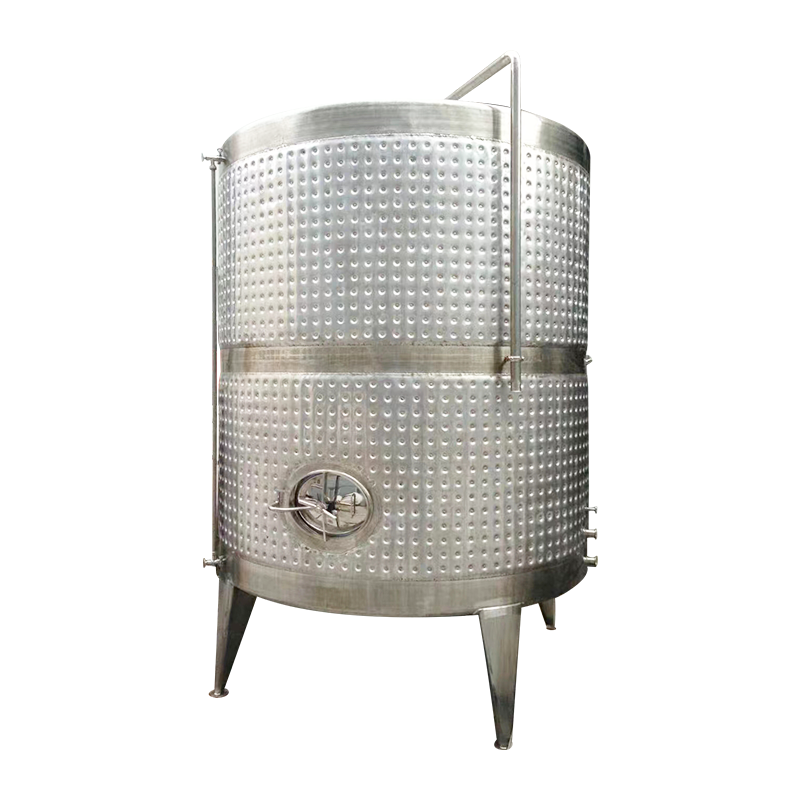
The effectiveness of a fermentation tank hinges on its engineering, which must integrate mechanical, thermal, and fluid dynamic systems to support biological processes. Material selection is paramount; stainless steel is favored for its corrosion resistance, cleanability, and ability to withstand repeated sterilization cycles. The vessel's geometry, often a height-to-diameter ratio between 2:1 and 3:1, promotes effective gas transfer and mixing. Agitation is provided by motor-driven impellers (like Rushton or marine propellers) which, combined with static baffles, ensure uniform distribution of cells, nutrients, and gases while preventing vortex formation.
Aeration and temperature control are vital subsystems. Air or oxygen is introduced through a sparger—a ring or tube with fine holes—at the tank's bottom. The rate and quality of aeration are carefully managed to meet the microorganism's oxygen demand without causing excessive shear stress. Temperature is regulated via a jacketed vessel or internal coils, through which heating or cooling fluid circulates. Advanced control systems use feedback from dissolved oxygen (DO), pH, and temperature probes to automatically adjust agitator speed, gas flow, and thermal input.
Sanitation defines operational reliability. All internal surfaces are polished to a high finish to prevent microbial adhesion, and all ports, valves, and seals are designed for aseptic operation. The precision engineering embodied in a modern fermentation tank creates a scalable, reproducible environment for microbial cultivation. This controlled habitat is essential for translating laboratory-scale fermentation processes into consistent, high-volume industrial production.