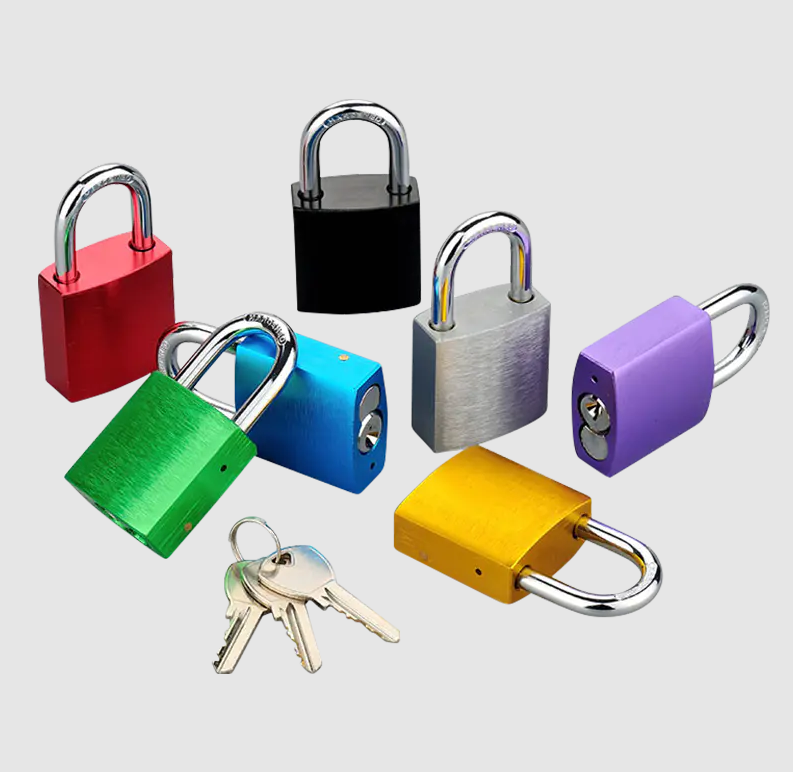
Security performance of a padlock depends on the combination of body strength, shackle hardness, and internal locking precision. A brass shackle padlock is often used in general security scenarios where corrosion resistance and stable mechanical operation are equally important as basic anti-tampering capability.
Although brass itself is relatively softer than hardened steel, it plays a critical role in lock body construction. The body protects the internal cylinder, which is the true security core. In most designs, the shackle is made of hardened steel while the body is cast or machined from solid brass, creating a hybrid structure optimized for different stress points.
Structural Security Components
A typical brass shackle padlock includes three main security layers:
External shell (brass body)
Locking shackle (hardened steel)
Internal cylinder mechanism (pin tumbler system)
The brass body resists environmental degradation, while the steel shackle handles direct physical force. The internal cylinder controls access logic and key authorization.
Common technical parameters:
Shackle diameter: 6 mm – 10 mm hardened steel
Body width: 30 mm – 70 mm
Pin system: 4-pin or 5-pin tumbler configuration
Locking type: single or double locking mechanism
Clearance height: 20 mm – 50 mm depending on model
Resistance to Environmental Wear
Outdoor exposure introduces moisture, dust, and temperature variation. Brass performs well in such conditions due to its low oxidation reactivity compared to iron-based materials. This prevents internal rust contamination that could block pin movement.
Some brass shackle padlock models also include:
Drainage channels at base of body
Anti-dust keyway covers
Internal lubrication coatings
Nickel or chrome-plated shackle surface
These features help maintain consistent locking performance across repeated cycles.
Mechanical Attack Resistance
The weakest point of most padlocks is the exposed shackle. To address this, hardened steel is used, often heat-treated to increase surface hardness. Some shackles undergo quenching processes to reach high hardness levels, reducing cutting efficiency of common hand tools.
Double-locking mechanisms also improve resistance. In this design, both ends of the shackle are independently secured inside the body, making it harder to force open through torsion or prying.
Use Case Suitability
A brass shackle padlock is commonly used in:
Storage sheds
Gate locking systems
Electrical utility boxes
Light industrial enclosures
Tool cabinets
It is not typically intended for high-security infrastructure but performs well in general-purpose protection where reliability and weather resistance are priorities.
Conclusion
Security of a brass shackle padlock comes from balanced engineering rather than extreme hardness. The brass body ensures long-term stability, while hardened steel and internal pin systems provide mechanical resistance against forced entry.