Spend any time sourcing hardware for bags, outdoor gear, or display systems and hanging buckles will appear on the component list more than once. They're rarely the most expensive item in the assembly, but they're often the one that determines how well the finished product functions — and how long it stays in use before a warranty claim arrives.
Trigger snap buckles combine a hanging function with a one-handed release mechanism. Squeezing the trigger or side tabs opens the gate, allowing the buckle to disengage from its anchor point without tools or two-handed operation. This design appears in helmet chin straps, backpack sternum straps, hydration pack hose clips, and safety equipment where quick disconnection matters. Rated versions used in fall protection and rescue equipment carry load certification markings and require material traceability.
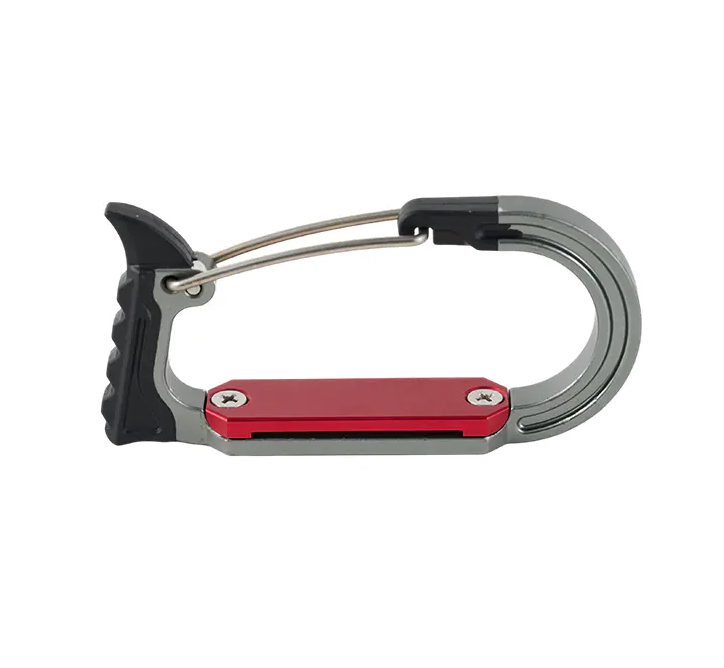
Carabiner-style hanging buckles blur the line between hardware and tool. The screw-lock or twist-lock gate prevents accidental opening, making them appropriate for situations where vibration, repeated contact, or dynamic loading could otherwise trip a spring gate open. They attach to belt loops, backpack daisy chains, equipment rails, and anchor systems across outdoor recreation, industrial, and utility applications.
In retail and display contexts, hanging buckles take a different form. Panel hanging systems use hook-and-slot buckles or J-hooks that engage slotted rails or perforated boards, allowing shelves, frames, and signage panels to be repositioned without tools. The load here is typically static and light, so stamped steel or zinc alloy hardware is sufficient, and finish consistency across the display matters as much as raw strength.